Booking choice: The 3-day tour with a luxury camp option, from $217 per person. Check dates Tour details
Most of the tour is spent in an air-conditioned vehicle, so comfort matters more than gear. The two moments that need planning are the night at the desert camp, when you take only a small bag, and the temperature swing between day and night in the dunes.
Here is what to pack, season by season.
The quick answer
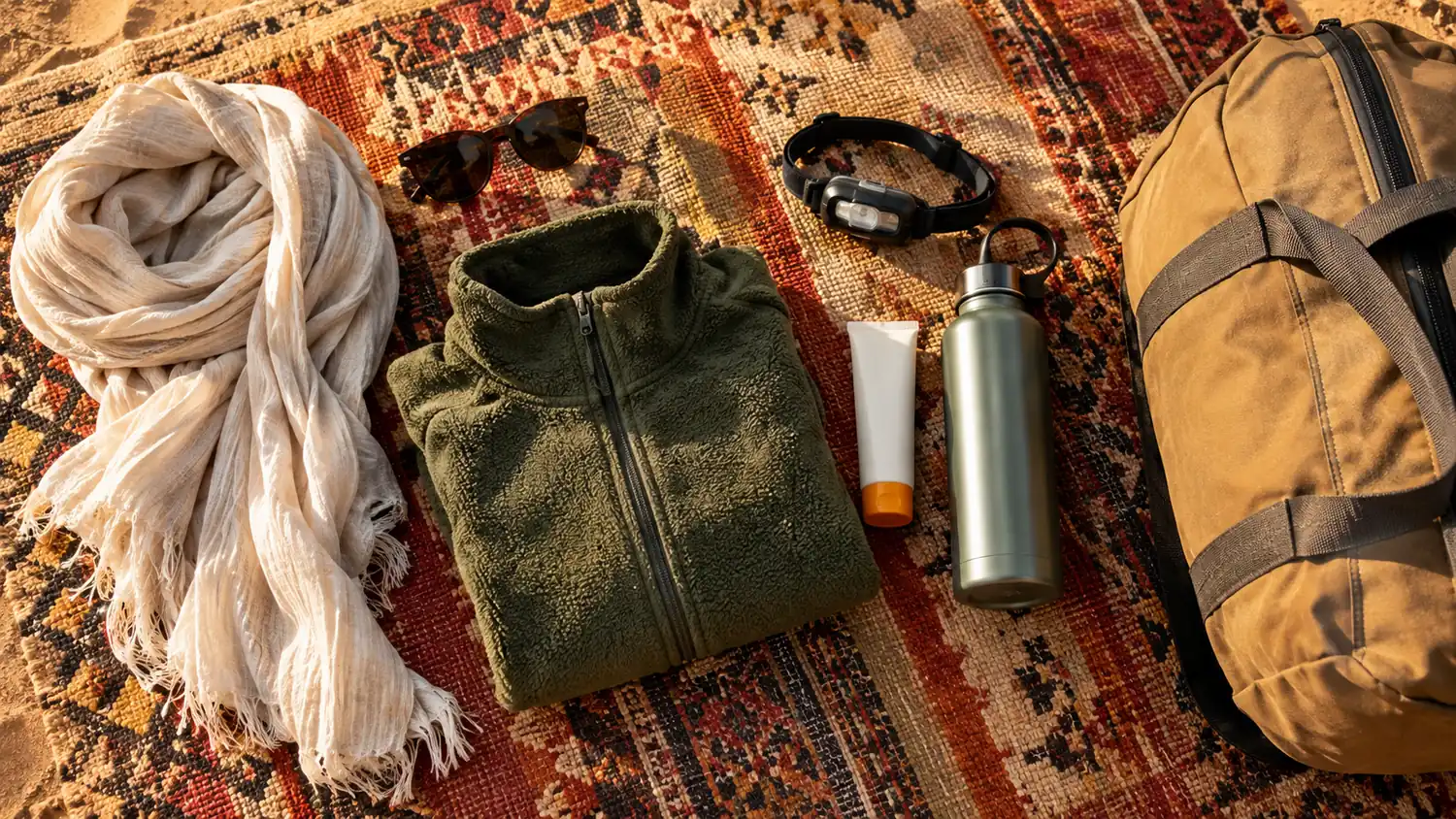
Pack a small overnight bag for the camp, a warm layer (a fleece or down jacket in winter), a scarf for sun and sand, sunglasses, sunscreen, a headlamp, comfortable closed shoes, a power bank and cash in dirhams for lunches, drinks and tips. From December to February desert nights fall near or below freezing.
What should you pack for a 3-day desert tour?
Pack light: a main bag that stays in the vehicle and a small overnight bag for the camp.
- Small overnight bag or daypack for the camp night
- Warm layer for the evening and sunrise
- Scarf or shemagh for sun and sand
- Sunglasses, sunscreen and lip balm
- Headlamp or small torch
- Comfortable closed shoes
- Power bank and charging cable
- Cash in dirhams for lunches, drinks and tips
- Any medication you need, and your passport
Packed and ready? Pick standard or luxury tent when you book, camel rides included.
Check dates for the 3-day tour with a luxury camp optionWhat goes in the overnight bag for the desert camp?
Everything you need for one night and the next morning: warm clothes, toiletries, a headlamp, your phone charger and medication.
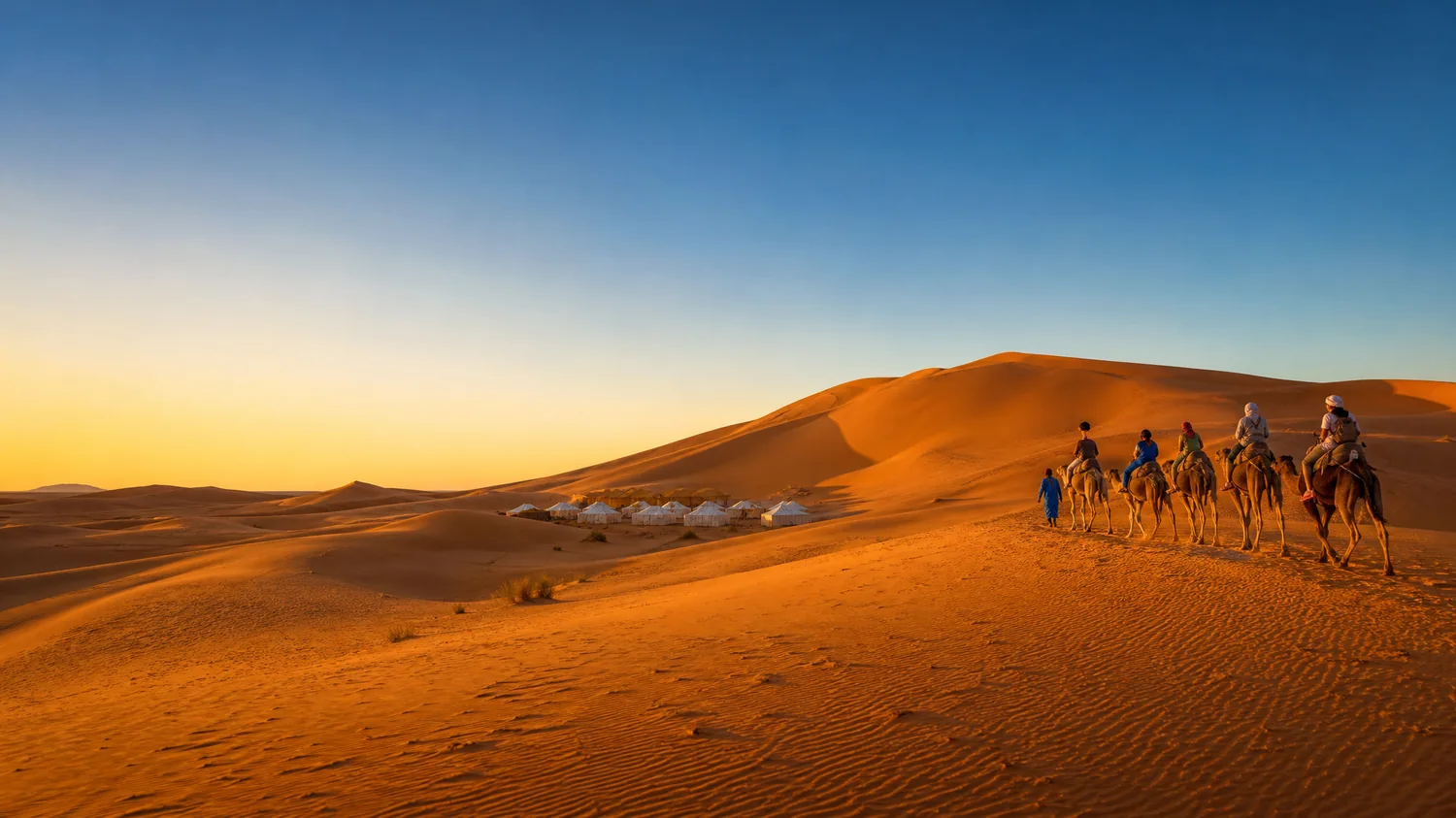
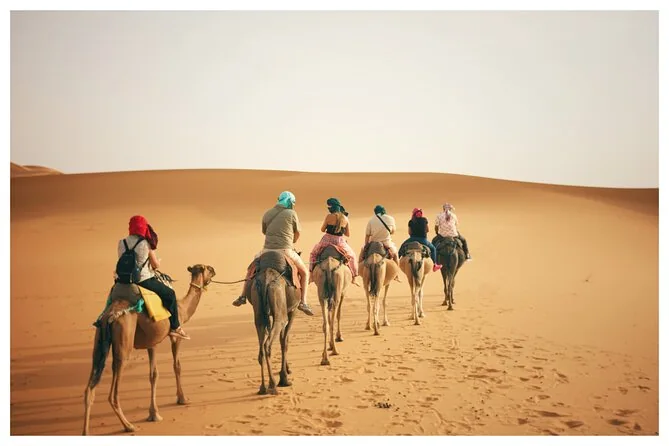
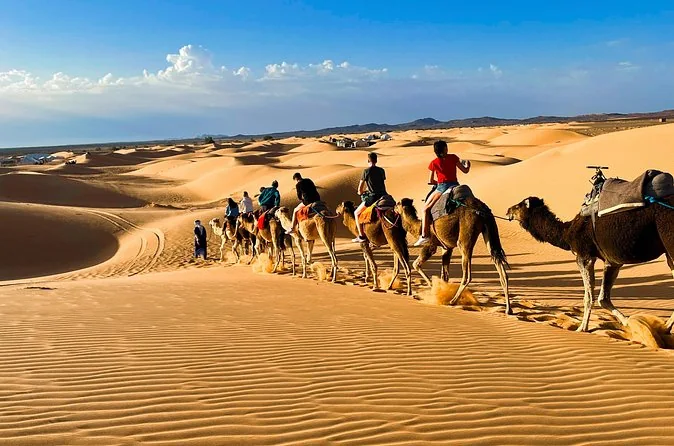
You ride to the camp on a camel and only need an overnight bag; ask your driver what stays in the vehicle. One guest on the shared tour said it was not clear what to take and what to leave, and they went straight onto the camels on arrival. Pack the small bag before you reach the dunes. If your tent is standard, the bathroom is shared, so a small towel and flip-flops help.
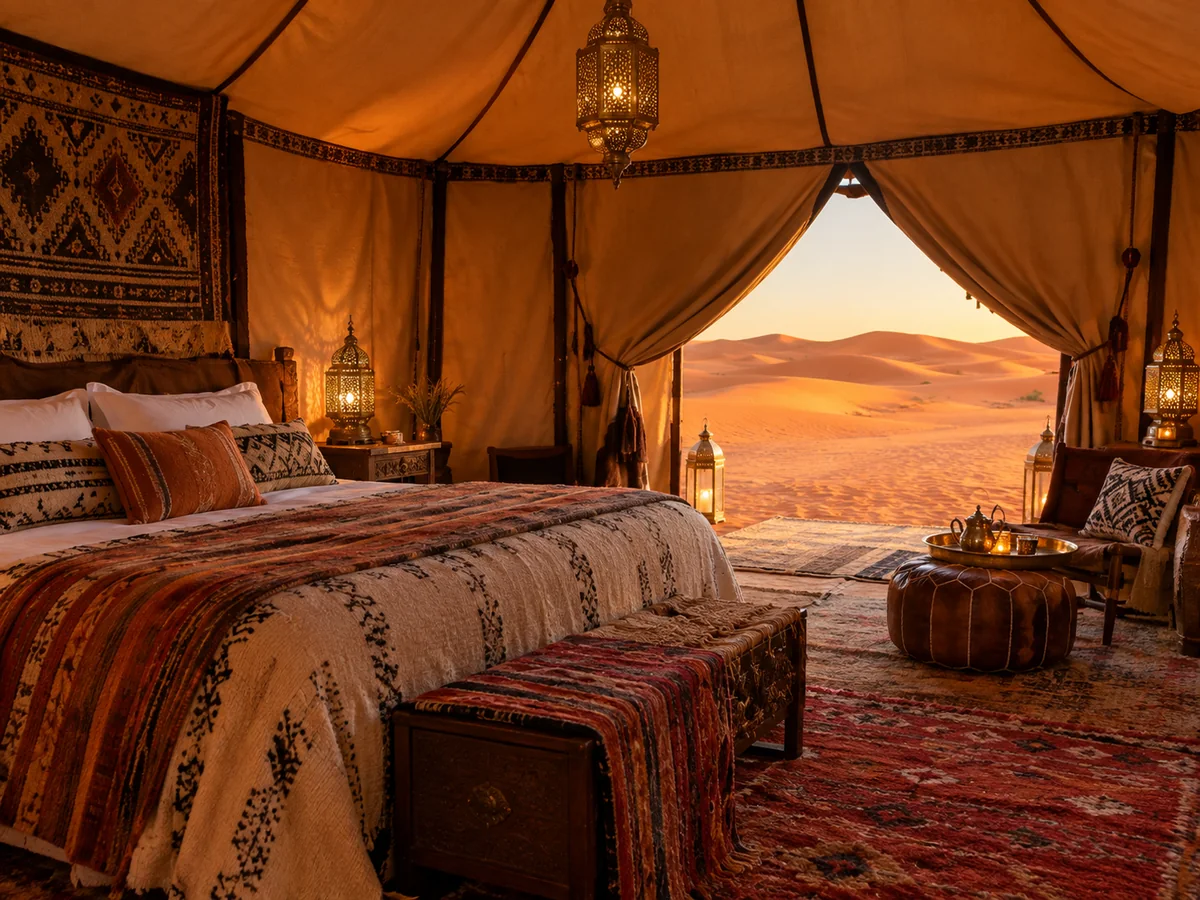
What should you wear in winter?
Warm layers: in December the days in Merzouga average about 18°C and the nights about 5°C.
Bring a fleece and a proper warm jacket, a hat, and warm socks for the night. A guest who travelled in winter warned that the desert was freezing and to bring very warm clothes. The Tizi n'Tichka pass on day 3 is at 2,260 m, so keep a layer handy in the car.
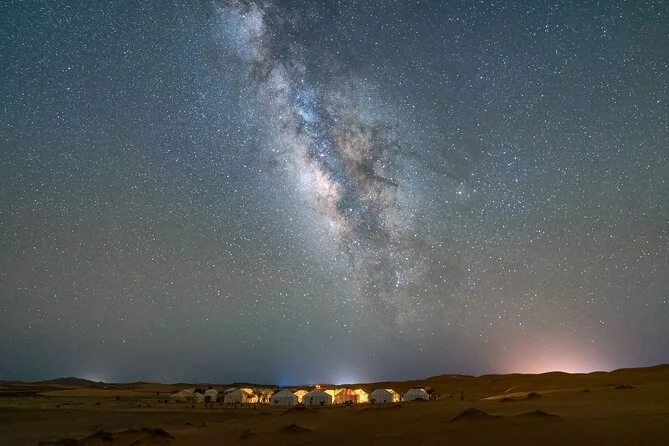
What should you wear in summer?
Loose, light, long-sleeved clothes, a scarf and a hat: in July and August daytime highs in the desert reach about 42°C.
Covering up protects you from the sun better than shorts and a vest, and it is also respectful in rural villages. Drink plenty of water, and keep sunscreen in your day bag. Spring (March to May) and autumn (late September to November) are milder, but still pack a warm layer for the night.
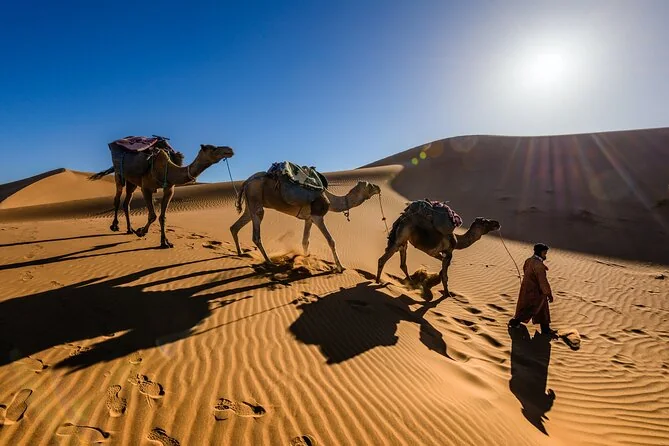
Want a hot shower after the dunes? The small-group tour includes a private en-suite tent.
Explore the small-group 3-day tour Tour detailsDo you need a scarf or headscarf?
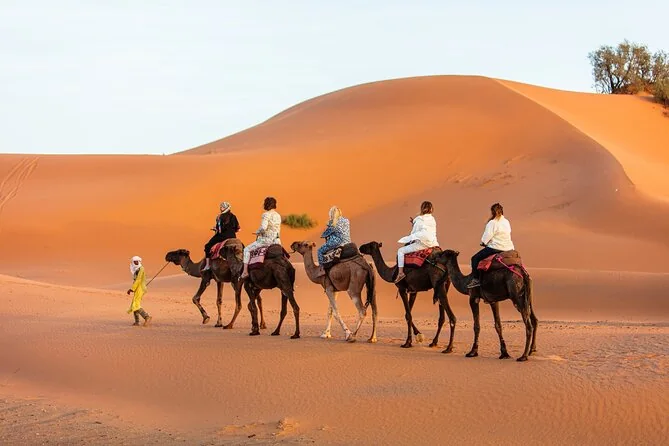
Yes, a long cotton scarf is a useful thing to pack: it keeps sun, wind and sand off your face on the camel ride.
Wrapped turban-style, it also keeps your head cool. You can buy one in the Fes medina before you leave. Sunglasses matter just as much: the light on the dunes is strong.
What shoes should you bring?
Comfortable closed shoes or trainers for the stops, and sandals you can slip off on the sand.
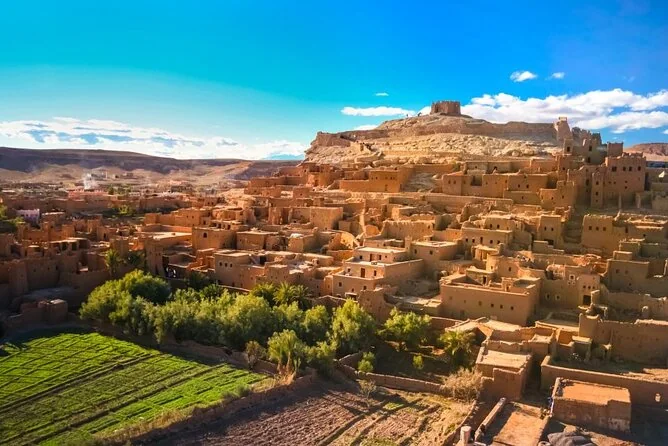
You will walk around kasbahs, gorges and souks, and one guest warned there are a lot of stairs. Sand gets into everything on the dunes, so many people go barefoot or in sandals there, and keep their trainers for the rest of the trip.
How much cash should you bring?
Enough dirhams for three lunches, drinks at the camp and the hotel, tips, and small extras such as a local guide at Ait Ben Haddou.
Lunches are never in the tour price, nor are drinks and tips on most listings; they are paid on the spot. Get cash in Fes before you set off. See the price guide for everything that costs extra.
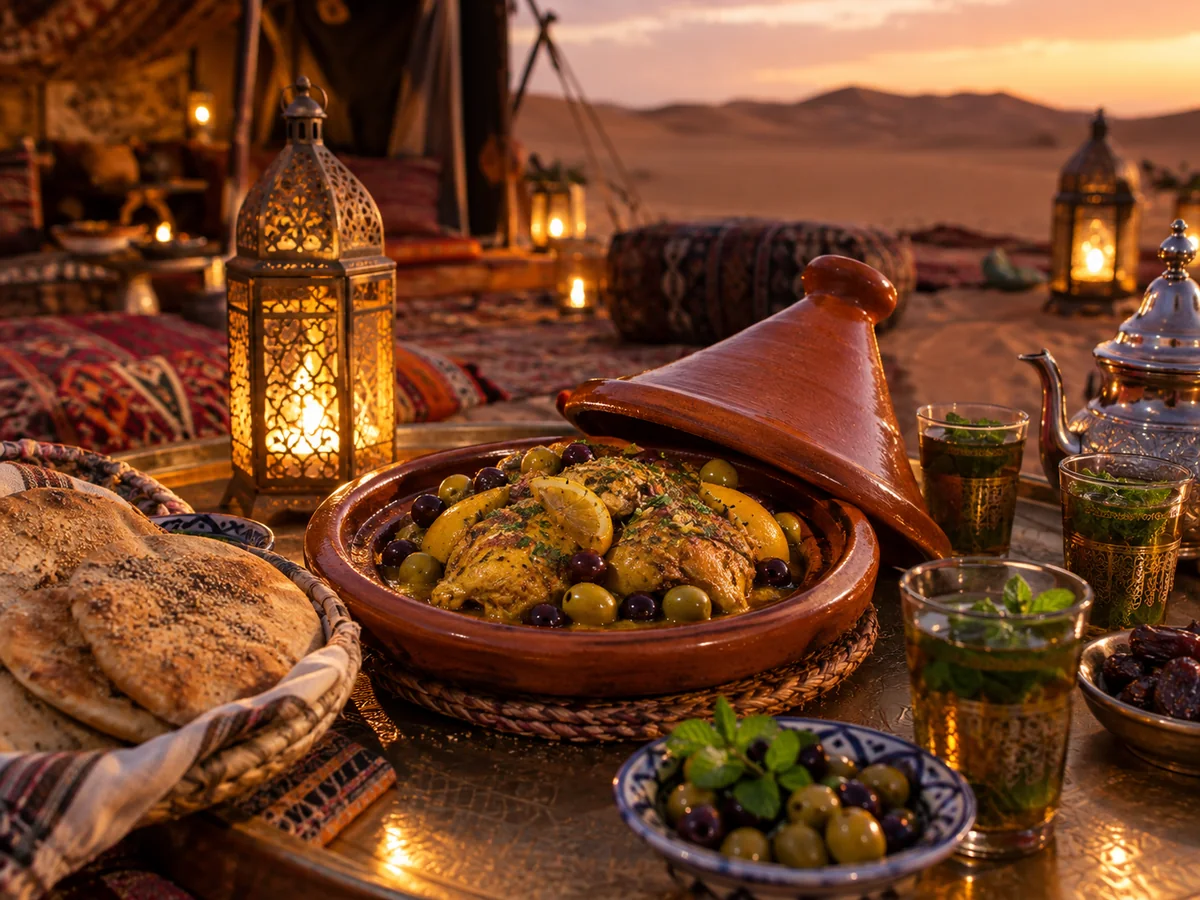
Want breakfast and dinner sorted? Both nights include them on the shared 3-day tour, with riad pickup.
Check dates for the shared 3-day tourDo you need a headlamp and a power bank?
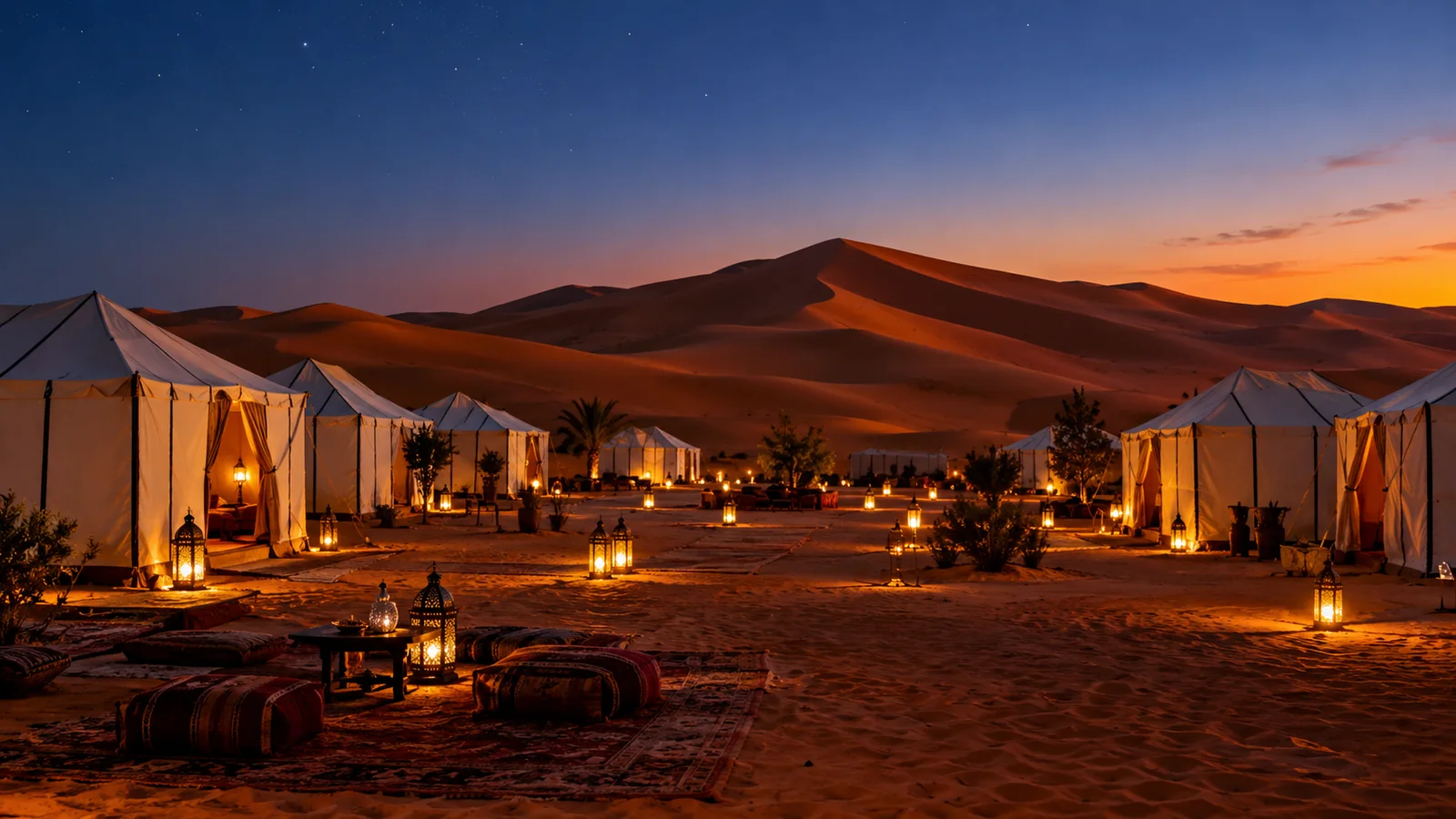
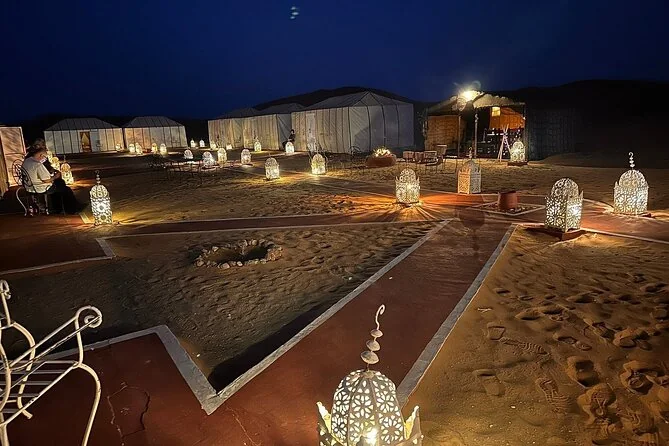
Yes to both: camps are lit by lanterns after dark, and you will want a charged phone for sunset and sunrise.
A headlamp helps on the way to a shared bathroom at night and for sunrise before the camel ride back. Some vans have power outlets and WiFi, guests on the budget tour report, but a power bank means you can always charge your phone for those sunset photos.
Frequently asked questions
How cold is the Sahara at night?
In December, nights in Merzouga average about 5°C after days near 18°C, and one winter guest called the desert freezing. Pack a warm layer for the night in any season.
Can I bring a big suitcase on a desert tour?
Yes, it travels in the vehicle, but you take only a small bag to the camp on the camel.
What should women wear on a desert tour in Morocco?
Loose, light clothes that cover shoulders and knees are comfortable in the sun and respectful in villages, with a scarf for sun and sand.
Do I need to bring water?
Bring a refillable bottle; drinks are not listed as included, so budget for water at stops.
Ready to book
Choose your tour
Free cancellation up to 24 hours before on every option. Prices are from-prices in USD and move with the season.
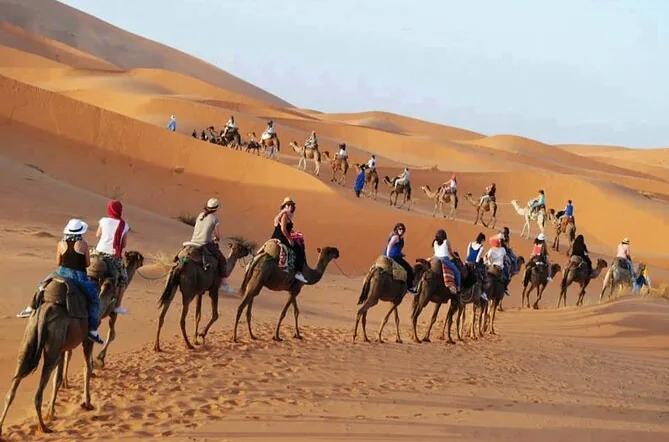
Fez to Marrakech 3-Day Tour with Luxury Camp Option
Pick a standard or luxury tent when you book
Fes to Marrakech 3-Day Small-Group Desert Tour
- Air-conditioned vehicle and English-speaking driver-guide
- Night 1: private tent with en-suite bathroom at a luxury camp in Erg Chebbi
- Night 2: private air-conditioned en-suite room in the Dades Gorges
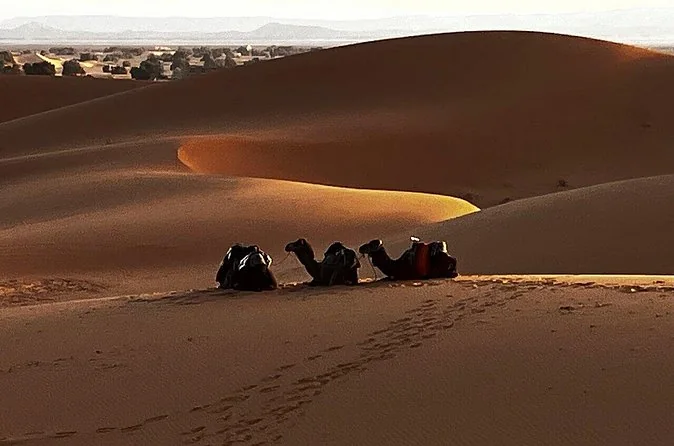
Fez to Marrakech 3-Day Shared Desert Tour
- Pickup from Fez hotels and riads (7:30 AM; nearest car point for medina riads)
- Air-conditioned vehicle, shared group of up to 30
- Camel trek into the Erg Chebbi dunes and a night in a desert camp